


グローバル企業日本支社のための産業医サービス|英語対応・統合型産業保健

こんにちは。産業医・心療内科医の薮野淳也です。
最近、日本支社に専属の産業医をお持ちでないグローバル企業様から、産業医業務のご相談が増えています。
ご相談いただく内容で多いのは、こうしたテーマです。
・休職社員の復職判定のプロセス設計
・安全配慮義務(Duty of Care)をどう日本の現場で履行するか
・ストレスチェック制度、健診後の事後措置などの法令対応
・グローバルHQへの英語報告
日本の労働安全衛生法は、グローバルHQから見ると独特なルールが多く、現地で実務を回す日本支社の人事担当者様が、孤独に困りごとを抱え込まれているケースをよく拝見します。
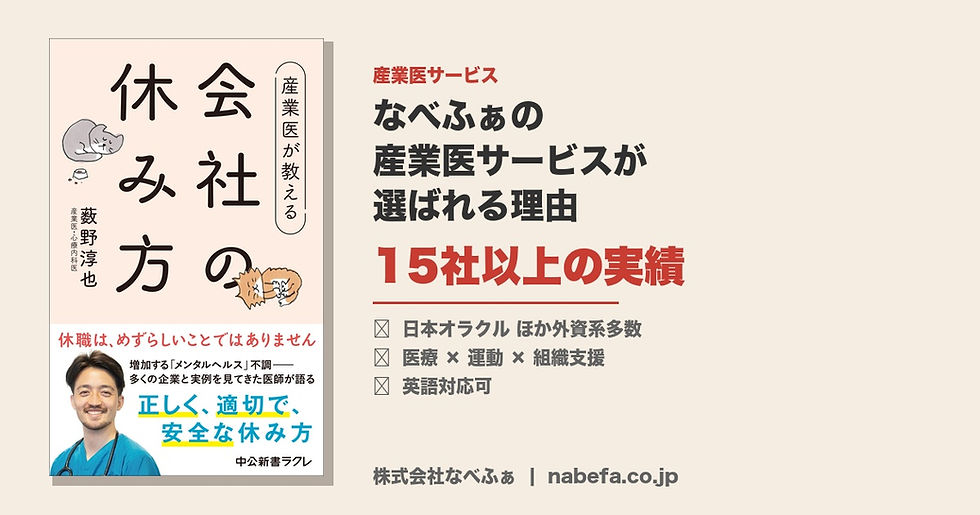
本記事では、私が外資系企業様で15社以上の産業医を担当してきた経験から、グローバル企業日本支社が直面する主な課題と、当社(株式会社なべふぁ)の統合型産業保健サービスがどう貢献できるかを整理します。

グローバル企業日本支社が直面する4つの実務課題
1. 休職社員の復職判定プロセス
日本の労働法体系では、休職社員の復職判定に「主治医意見書」「産業医面談」「段階的復職(リハビリ出勤)」など、独特のステップが組み込まれています。
私が産業医として複数社で復職判定に関わってきた経験から、判定で見るポイントは4つです。
1. 主治医が復職可能と判断している
2. 本人に「定時で1ヶ月働ける感覚」がある
3. 通勤訓練(リハビリ出勤)を1〜2週間問題なく続けられた
4. 軽減業務での試運転を2週間こなせた
これらが揃って、初めて通常業務への段階移行を検討します。
「本人が戻りたいと言っている」だけで判断すると、再休職率が一気に上がります。
グローバルHQに「Why does Japan need so much documentation?」と聞かれた時、この日本独特の慎重さと、その背景にある法的責任(安全配慮義務)を英語で説明することが、人事担当者様の負担になっています。
私は英語での復職判定面談・報告書作成・HQへのプレゼンテーションまで対応可能です。
2. 安全配慮義務(Duty of Care)の実務的履行
日本の労働契約法第5条で定められた「安全配慮義務」は、グローバルHQから見ると曖昧で抽象的に映りがちです。
「duty of care と何が違うのか」「具体的に何をすればいいのか」「面談1回でリスクは下がるのか」と、HQから疑問が寄せられます。
実務的にリスクを下げる5つのアクション:
1. 高ストレス者・長時間労働者への面談実施(記録を残す)
2. 健診結果のフォロー(C/D判定者への受診勧奨)
3. 復職判定プロセスの設計と運用
4. 管理職向けラインケア研修
5. ハラスメント相談窓口と医師の連携
「やった/やってない」が記録に残せること。
これが訴訟リスクを下げる最大の防御線です。
3. ストレスチェック・健診事後措置・衛生委員会
これら3つは、日本独特の法定制度で、英語ガイドラインや国際基準には載っていません。
ストレスチェック制度
従業員50人以上の事業場で年1回実施が義務。2025年改正で50人未満の事業場にも義務化が広がりました(2028年完全施行)。
形式的に実施するだけでなく、集団分析→職場改善のサイクルまでが本来の目的です。
健康診断後の事後措置
法定健診を実施するだけでなく、有所見者への保健指導、就業判定意見書、産業医面談まで含めて初めて法的責任を果たせます。
衛生委員会
月1回開催が義務(事業場規模に応じて構成員指定あり)。
形式化しやすいですが、ここでこそ「日本支社のリスクとHQへの説明」をすり合わせる場になります。
4. グローバルHQへの英語報告
本社からのリクエストにより、四半期ごとの英語報告書、年次レビュー、緊急時の医療判断の説明など、英語でのコミュニケーションが必要なケースが増えています。
私は外資系企業様での産業医経験を活かし、
・英語での産業医面談(社員本人との面談)
・英語報告書の作成
・グローバルHQへの説明資料・プレゼンテーション
・緊急時の英語での状況報告
までワンストップで対応可能です。
なべふぁの統合モデル — 産業医 × 心療内科 × 運動療法
株式会社なべふぁが他の産業医サービスと異なる点は、社内に医療機関と運動療法施設を併設していることです。
・株式会社なべふぁ(産業医・WellFitプログラム)
・Stay Fit Clinic(働く人のための内科・心療内科、英語診療対応可)
・CrossFit Aoyama(厚生労働省認定 指定運動療法施設、医療費控除対象)
産業医面談で見えた課題に対して、「次の繋ぎ先」を自社で持っているため、
・メンタル不調者 → 提携クリニックまたはStay Fit Clinicへスムーズに紹介
・復職時の運動療法 → CrossFit Aoyamaのプログラムを組み込み
・英語対応が必要な社員 → 私自身が英語で診療・面談
という流れが、すべて自社内で完結します。
ご相談の流れ
初回ご相談(無料)
30分程度のオンラインミーティングで、現状の課題を伺います。日本語・英語どちらでも可能です。
ご提案
御社の規模、業種、現状の労務体制に応じた産業医契約・WellFitプログラムのご提案をします。
契約・運用開始
月1回の事業所訪問が基本ですが、ご要望に応じて頻度・形態を調整します。英語でのレポート・HQへの報告も標準対応です。
おわりに
日本支社の人事担当者様にとって、「専属の産業医を採用するほどではないが、月1回の信頼できる相談先がほしい」「日本独特の労務関連リスクを、英語で本社に説明できる医師が必要」というニーズは、確実に増えています。
私自身、外資系企業様での産業医経験を踏まえ、グローバルHQへの説明資料・英語報告書・面談記録を含めた一体運用をサポートしています。
ご質問・ご相談、お気軽にお寄せください。
📩 DM・お問い合わせフォームから受付しています
English Section
Hello, I'm Junya Yabuno, MD, MPH — an occupational physician and psychosomatic medicine specialist based in Tokyo.
We've been receiving more inquiries from global companies' Japan offices that don't yet have an in-house occupational physician.
The topics most commonly raised include:
・Designing return-to-work processes for employees on leave
・Operationalizing "duty of care" (*anzen-hairyo-gimu*) under Japanese law
・Stress check program, post-health-check follow-up, and other statutory requirements
・English-language reporting back to global HQ
Japan's Industrial Safety and Health Act has many country-specific nuances not found in English guidelines or international standards. HR teams at Japan subsidiaries often find themselves navigating these alone, with little support from global HQ.
This article outlines the four most common challenges and how Nabefa Inc.'s integrated occupational health services can support your Japan operations.
1. Return-to-Work Decisions
Japanese labor law includes unique steps: treating physician's opinion letter, occupational physician interview, phased return-to-work (*rehabilitation attendance*).
From experience handling return-to-work cases at multiple global companies, I assess four criteria:
1. The treating physician has confirmed return-to-work readiness
2. The employee senses they can "work full-time for a month"
3. They have completed 1-2 weeks of commute rehearsal
4. They have handled 2 weeks of reduced-load duties
When global HQ asks, "Why does Japan need so much documentation?" — I can explain this Japan-specific caution, and its legal basis (*anzen-hairyo-gimu*), to your global HQ in English.
2. Duty of Care (*Anzen-Hairyo-Gimu*)
Japan's Labor Contract Act Article 5 establishes a duty of care for employees' safety. Japanese case law has held executives accountable in mental health and *karoshi* (death from overwork) related cases.
The five actions that practically reduce litigation risk:
1. Consultations with high-stress and overworked employees (with documented records)
2. Follow-up on health check results (referral guidance for C/D-grade findings)
3. Designed return-to-work decision processes
4. Line-care training for managers
5. Coordination between harassment hotlines and medical staff
Documentation is the key defense. "We did this, on this date, with this outcome" — that record is your legal shield.
3. Stress Check, Post-Health-Check Follow-up, Health & Safety Committee
These three are Japan-specific statutory requirements:
Stress Check Program — Mandatory annual program at workplaces with 50+ employees. 2025 amendments extend this to smaller workplaces (full enforcement in 2028). The real purpose isn't checkbox compliance — it's the cycle of group analysis followed by workplace improvement.
Post-Health-Check Follow-up — Conducting statutory health checks isn't enough. Legal obligations are met only by combining health guidance for abnormal results, work-fitness opinions, and occupational physician consultations.
Health & Safety Committee — Monthly committee meetings are mandatory. Easy to let these become formalities — but this is precisely the venue for aligning Japan-specific risks with HQ expectations.
4. English Reporting to Global HQ
I support:
・English-language occupational physician interviews
・English reporting documents
・Presentations and explanation materials for global HQ
・Real-time English communication for urgent medical decisions
Nabefa's Integrated Model
What distinguishes Nabefa Inc. is the integration of:
・Nabefa Inc. (occupational physician services and WellFit corporate wellness program)
・Stay Fit Clinic (internal medicine and psychosomatic clinic, English consultations available)
・CrossFit Aoyama (Ministry of Health-certified exercise therapy facility, eligible for medical expense deduction)
All three operate under the same management, meaning when an occupational physician interview identifies an issue, the next step — treating clinic, exercise therapy, or English-capable medical care — is available in-house.
How to Get Started
Initial consultation (free) — 30-minute online meeting to discuss your current challenges. Available in Japanese or English.
Proposal — A tailored occupational physician contract or WellFit program proposal based on your company size, industry, and current setup.
Engagement begins — Standard service is one monthly site visit, with frequency adjustable based on need. English reporting and HQ communication are standard.
Closing Thoughts
"We don't need a full-time occupational physician — we just need a reliable monthly partner."
"We need a doctor who can explain Japanese labor-related risks to our global HQ in English."
If these resonate, please reach out.
📩 Inquiries welcome via DM or contact form. Available in English.
なべふぁ代表/産業医・心療内科医 薮野淳也
Junya Yabuno, MD, MPH | CEO, Nabefa Inc.
\ サービス一覧はこちら / Our Services /
【法人向け】株式会社なべふぁ(産業医・WellFit) / Nabefa Inc. (Occupational Health & WellFit)
✔ メンタル不調・労務リスクへの対応 / Mental health response and labor risk management
✔ グローバルHQへの英語レポート対応 / English reporting to global HQ
✔ 統合型ウェルネスプログラム / Integrated wellness program
https://www.nabefa.co.jp
【医療】Stay Fit Clinic(働く人のための内科・心療内科、英語診療対応可) / English-capable internal medicine & psychosomatic clinic
https://www.stayfitclinic.tokyo
【運動】CrossFit Aoyama(厚労省認定 指定運動療法施設) / Ministry of Health-certified exercise therapy facility
https://www.crossfitaoyama.com

コメント